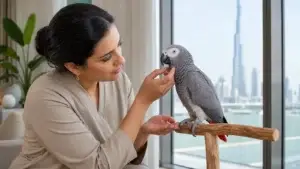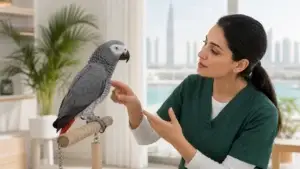
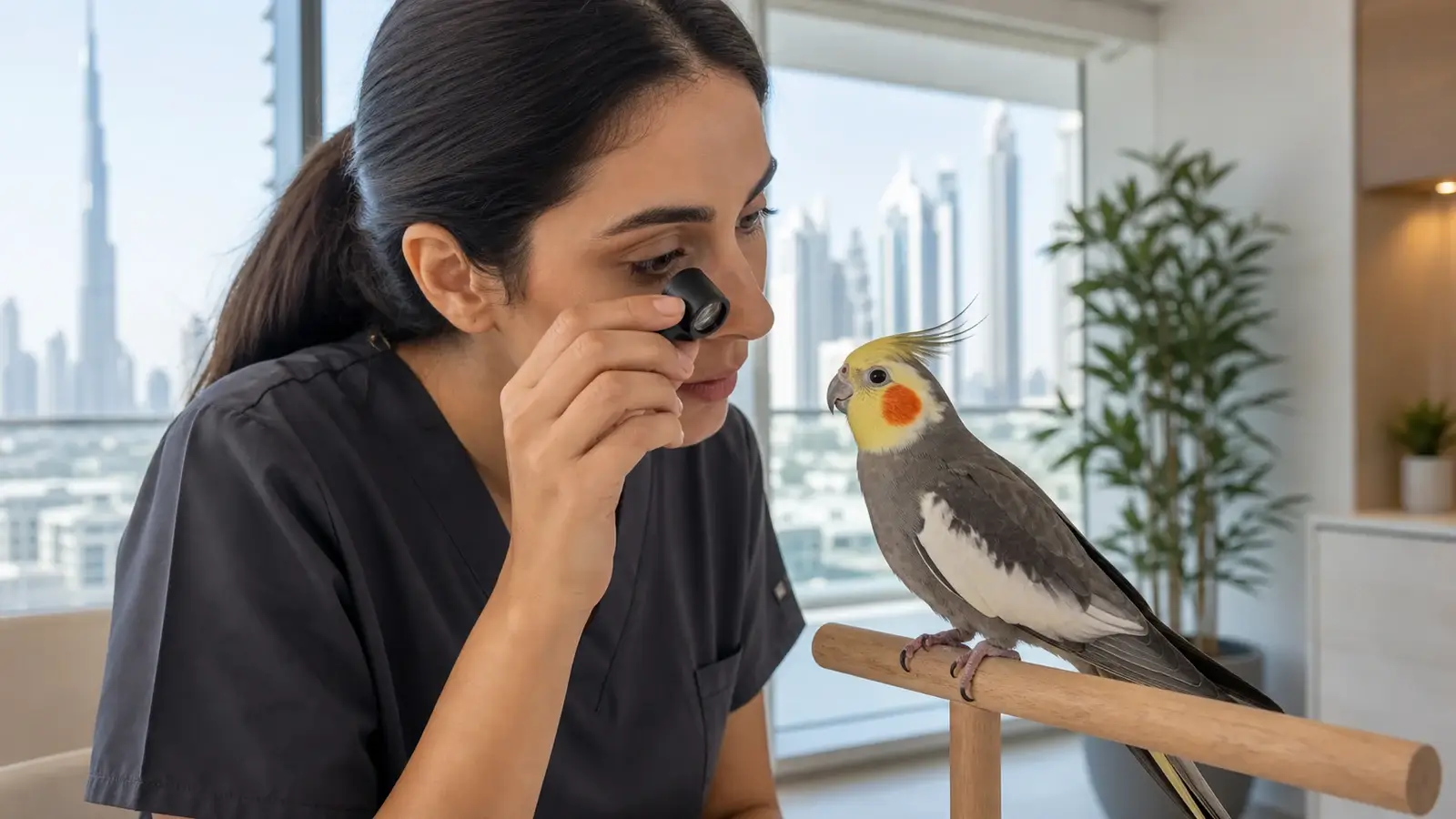
A healthy bird’s beak grows continuously and wears through eating, chewing and normal activity. Routine beak trimming is usually unnecessary. Overgrowth, deformity, cracking, bleeding, softness or eating difficulty needs an avian veterinarian.
A pointed beak or light surface flaking is not automatically a problem.
How normal beak wear works
The beak is a living structure used for:
- eating;
- climbing;
- manipulating objects;
- preening;
- and exploration.
Appropriate food, safe chewing opportunities and normal activity support wear.
Normal changes versus warning signs
Possible normal findings include mild surface flaking or gradual wear.
Warning signs include:
- clear overgrowth;
- asymmetry;
- deep cracks;
- bleeding;
- soft areas;
- discolouration;
- rapid change;
- difficulty eating;
- or loss of normal function.
Photographs can help document change but cannot diagnose the cause.
Why a beak becomes overgrown
Possible contributors include:
- abnormal wear;
- nutrition;
- liver or other disease;
- trauma;
- congenital deformity;
- or chronic damage.
A groomer should not diagnose the cause from appearance.
Who should handle beak problems?
An avian veterinarian should assess abnormal growth or damage.
Complex beak work can involve sensitive tissue and may require medical evaluation.
A general groomer should not treat beak trimming as routine cosmetic work.
Is beak care part of bird grooming?
A grooming appointment may include:
- visual observation;
- discussion of chewing and enclosure setup;
- and referral when a change is noticed.
The service should not automatically include shortening a healthy beak.
Enrichment and natural wear
Safe species-appropriate chewing materials can support natural activity.
Avoid using unverified abrasive products as a substitute for veterinary assessment.
The complete diet and enclosure should be discussed with an avian professional.
SMS Bird Basic package
The current SMS Bird Basic card displays a beak-related service.
Before booking, describe:
- species;
- age;
- eating changes;
- previous beak work;
- medical conditions;
- and the exact concern.
A package listing does not prove that trimming is needed.
Review the current bird grooming page.
Related grooming guides
Frequently asked questions
Does every bird need its beak trimmed?
No. Healthy birds usually maintain normal wear.
Is a flaky beak abnormal?
Minor surface flaking can occur. Deep cracks, bleeding or rapid changes need assessment.
Can a groomer fix an overgrown beak?
Abnormal growth should be assessed by an avian veterinarian.
Can chewing toys prevent every beak problem?
No. They support normal activity but do not treat disease or deformity.
Is beak trimming painful?
Incorrect work can injure sensitive tissue. This is why abnormal beaks belong with an avian veterinarian.