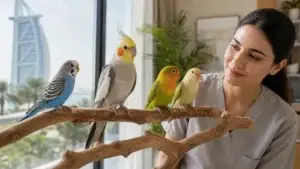
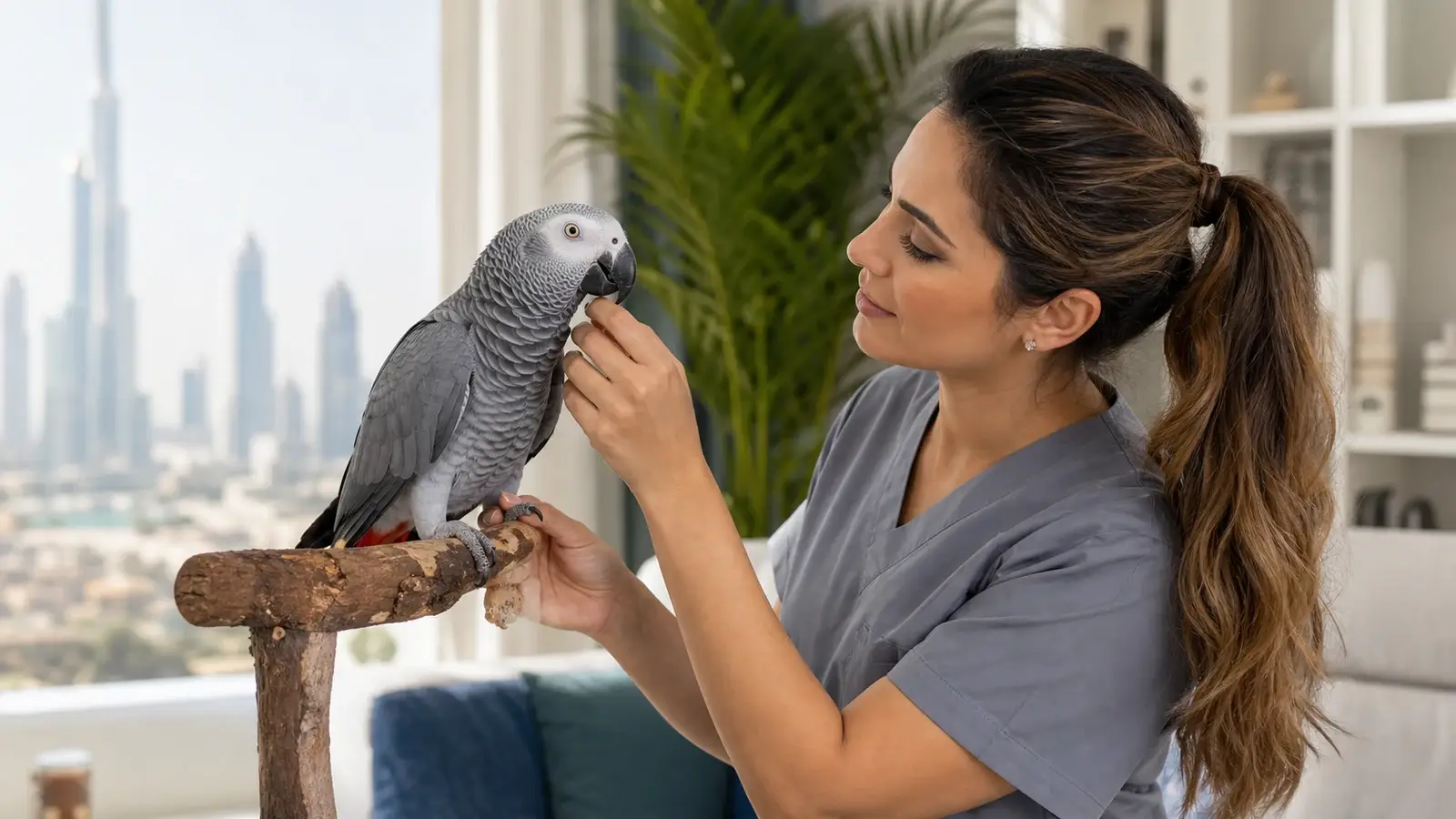
Parrot grooming mainly supports normal preening and bathing, checks whether nails affect grip, observes the beak and treats wing trimming as an individual decision. Healthy parrots usually maintain their own feathers and beaks.
The correct grooming plan depends on species, body size, health, flight status and actual need.
Parrot grooming at a glance
| Area | Normal approach |
|---|---|
| Nails | Assess grip, shape and true overgrowth |
| Beak | Observe normal wear; avoid routine trimming |
| Feathers | Support bathing and preening |
| Moult | Observe normal replacement and new feather growth |
| Wings | Individual flight-management decision |
| Health | Refer abnormal changes to an avian veterinarian |
A package should not automatically include every component.
Nail care
Parrot nails support climbing and perch grip.
Professional assessment may be useful when nails:
- interfere with grip;
- alter toe position;
- snag repeatedly;
- or grow abnormally.
Sharpness alone is not enough.
Read the bird nail-trimming guide.
Beak care
Healthy parrot beaks usually wear through eating, climbing and chewing.
Routine trimming is generally unnecessary.
Contact an avian veterinarian for:
- overgrowth;
- asymmetry;
- cracks;
- bleeding;
- softness;
- colour change;
- or eating difficulty.
Read Bird Beak Care.
Bathing and feather care
Bathing supports feather condition and preening.
Different parrots may prefer:
- a shallow dish;
- gentle misting;
- a shower-like environment;
- or wet leaves.
Use plain clean water unless an avian veterinarian recommends otherwise.
Do not force a frightened bird through a bath.
Moulting and pin feathers
Moult replaces old feathers with new ones.
New feathers can be sensitive while developing. Abnormal feather damage, severe picking, persistent baldness or skin injury needs veterinary assessment.
A groomer should not diagnose feather disease.
Wing trimming and flight
Wing trimming is not required for every parrot.
Before considering it, discuss:
- species and age;
- flight experience;
- household hazards;
- training;
- owner goals;
- and the bird’s physical and behavioural needs.
An aggressive trim can reduce stability and increase fall risk.
Read the wing and feather-trimming guide.
Species differences
An African Grey, conure, cockatoo and macaw differ in:
- body size;
- powder down;
- strength;
- flight;
- nail size;
- and handling risk.
The provider should have experience with the specific species.
When an avian veterinarian is needed
Contact an avian veterinarian for:
- abnormal beak or nail growth;
- breathing changes;
- weakness;
- wounds;
- reduced appetite;
- abnormal droppings;
- severe feather loss;
- or a major behaviour change.
Medication and sedation belong to a veterinarian.
Professional parrot grooming in Dubai
SMS Pet Grooming provides at-home bird grooming with Basic and Full options.
Before booking, provide the species, approximate age, flight status, health history and exact service concern.
Review the current bird grooming service.
Related grooming guides
Frequently asked questions
Do parrots need professional grooming?
Not always. Professional help may be useful for true nail overgrowth, a suitable cleaning need or an informed wing decision.
Should a parrot’s beak be trimmed?
Healthy beaks usually do not need routine trimming.
How often should parrots bathe?
The schedule depends on species, environment and preference.
Is wing clipping necessary?
No. It is an optional individual decision.
Can a groomer treat feather plucking?
No. Feather-damaging behaviour needs avian-veterinary assessment.