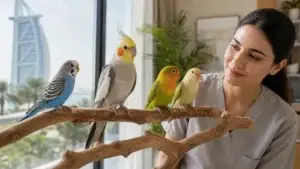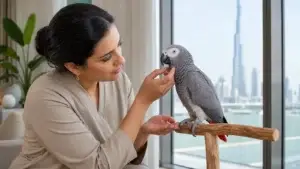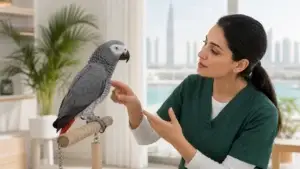
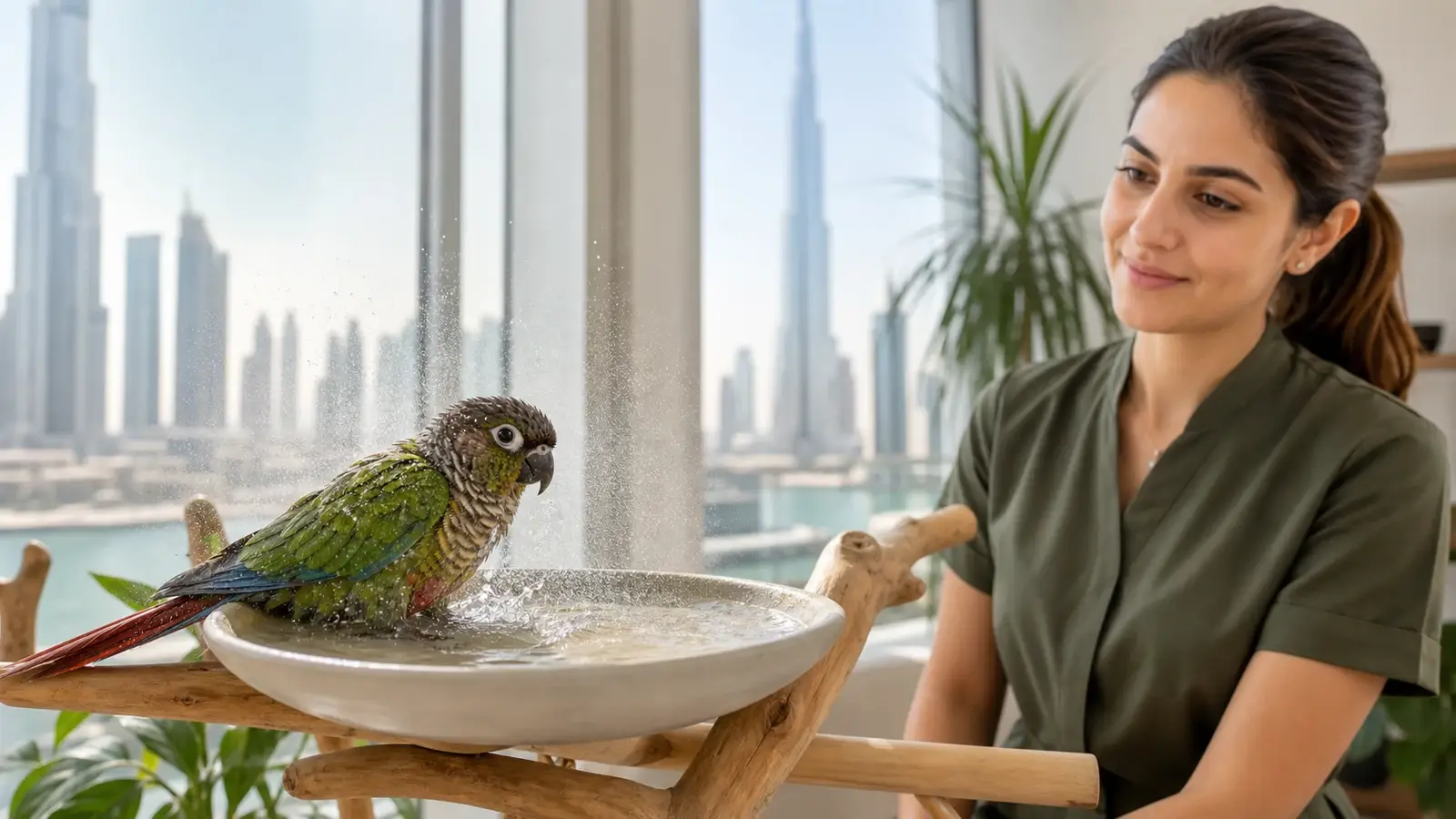
Bathing supports feather maintenance, skin hydration and normal preening, but birds differ in how and how often they prefer to bathe. Offer a safe species-appropriate option and do not force a frightened bird.
Plain clean water is generally the safest default unless an avian veterinarian recommends another product.
Why birds bathe
Bathing can:
- remove dust and debris;
- support feather condition;
- hydrate skin;
- encourage preening;
- and provide enrichment.
Bathing does not treat feather disease.
How often should birds bathe?
There is no universal interval.
Frequency depends on:
- species;
- humidity;
- powder down;
- enclosure;
- individual preference;
- moult;
- and health.
Some birds seek water frequently. Others prefer occasional bathing.
Common bathing methods
Depending on species and preference, birds may use:
- a shallow dish;
- gentle mist;
- a shower-like environment;
- damp leaves;
- or water droplets from a safe source.
A method should allow the bird to move away.
Do not spray directly into the face or force a panicked bird to remain wet.
What products should be used?
Plain clean water is generally the default.
Do not assume that fragrance, soap, oil, aloe, disinfectant or human products are bird-safe.
Respiratory sensitivity makes product verification especially important.
Use a product only under avian-veterinary guidance.
Drying after bathing
Allow the bird to dry in a warm, draft-free environment.
Avoid overheating, intense forced air or prolonged restraint.
A weak, sick or chilled bird needs veterinary attention.
Feather condition and moult
During moult, old feathers are replaced by new feathers.
Observe for:
- broken feathers;
- persistent bald areas;
- damaged skin;
- excessive picking;
- blood feathers;
- or loss of normal feather quality.
Abnormal changes need an avian veterinarian.
What if the bird refuses bathing?
Do not force the bird.
Try a different safe method at another time, or discuss species-specific preferences with an avian professional.
Fearful behaviour is a reason to pause, not to complete the package at any cost.
SMS bird cleaning service
The current SMS Bird packages display washing and drying elements.
Before booking, ask:
- which method is used;
- whether products are used;
- how the bird is dried;
- how species differences are handled;
- and what happens when the bird becomes distressed.
Review the bird grooming service.
Related grooming guides
Frequently asked questions
Can I use soap on a bird?
Do not use soap unless an avian veterinarian recommends a specific product.
How often should a parrot be misted?
It depends on species, preference and environment.
Should a bird be blow-dried?
Any drying method must avoid heat, fear and respiratory risk. Confirm the provider’s approach.
Why does my bird have damaged feathers?
Moult, trauma, behaviour or disease may contribute. An avian veterinarian should assess abnormal changes.
Is fragrance safe for birds?
Do not assume it is safe. Bird respiratory systems are sensitive, and products require specialist verification.