
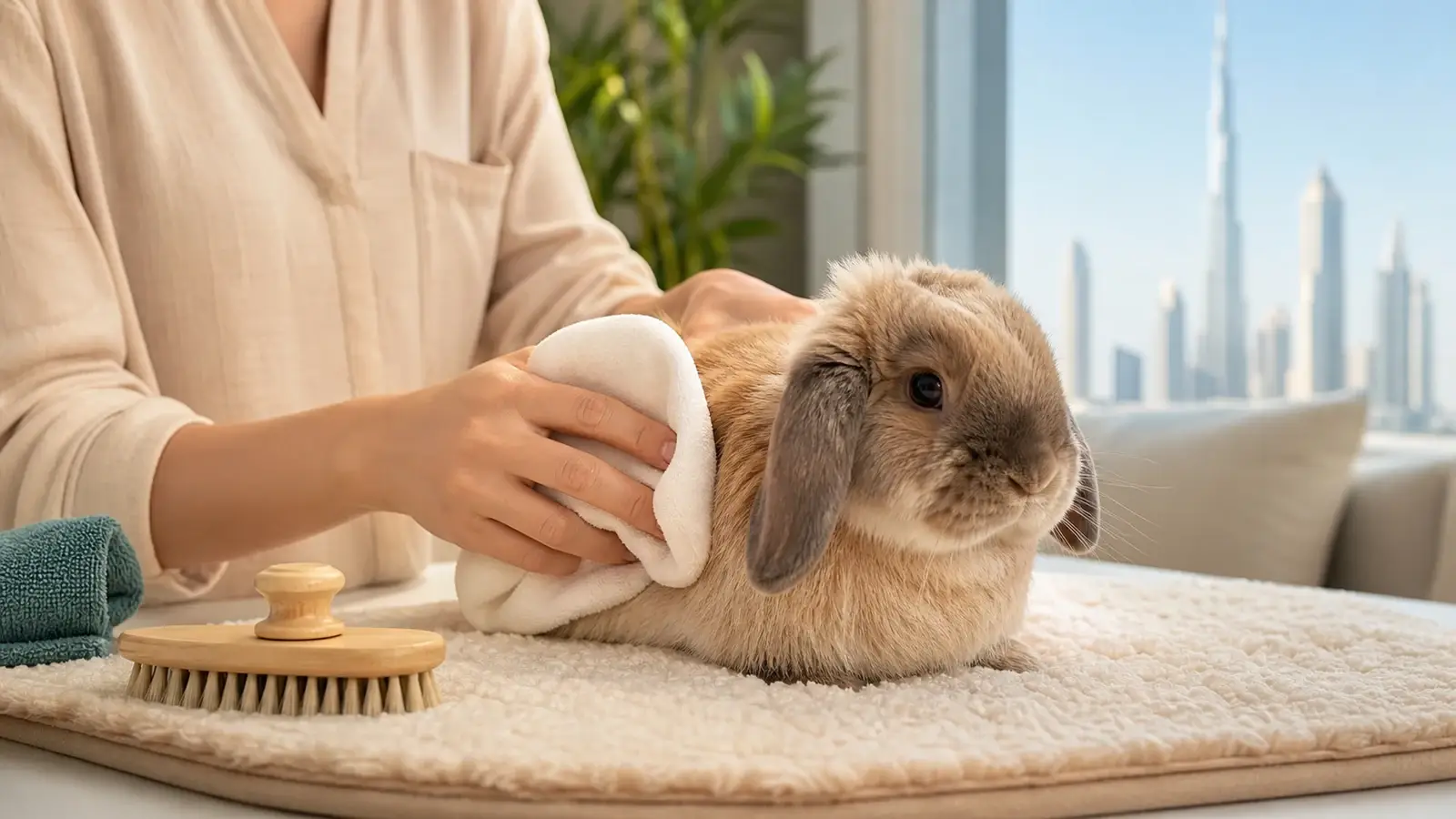
Rabbits should not receive routine full-water baths. Bathing can cause severe stress and chilling, and a dense wet coat can be difficult to dry completely. Brushing, dry cleaning or limited spot cleaning are usually safer.
A dirty bottom, urine-soaked coat or persistent odour may indicate a medical or husbandry problem rather than a simple grooming need.
Why full baths are discouraged
A full bath can create:
- intense stress;
- struggling and injury risk;
- chilling;
- prolonged dampness;
- skin problems;
- and difficulty drying the undercoat.
Rabbits are naturally clean animals. Routine bathing is not part of normal coat care.
Safer alternatives
Depending on the problem, a rabbit may need:
- brushing;
- removal of loose fur;
- careful dry cleaning;
- limited spot cleaning;
- professional coat trimming;
- or veterinary treatment.
The method should match the cause of the dirt.
What if the rabbit has a dirty bottom?
A persistently dirty bottom can be associated with:
- arthritis;
- obesity;
- dental disease;
- diarrhoea;
- urinary problems;
- diet;
- mobility limitations;
- or an unsuitable environment.
Cleaning the fur without addressing the cause can allow the problem to return.
Contact a rabbit-savvy veterinarian for persistent soiling, urine scald, wounds, strong odour or flystrike risk.
Can rabbit shampoo be used?
Do not use shampoo as a routine solution.
Generic dog, cat, human or flea products may be unsuitable or dangerous.
Use a product only when a rabbit-savvy veterinarian recommends it for the individual rabbit.
What about fleas or parasites?
Do not bathe the rabbit with an unapproved flea product.
Some products used for other species can be toxic to rabbits.
Parasites require veterinary diagnosis and rabbit-safe treatment.
What if only one area is dirty?
Limited cleaning may be appropriate when:
- the affected area is small;
- the rabbit is otherwise healthy;
- the coat can be dried quickly;
- and the cause is understood.
A professional or veterinarian should guide more serious cases.
This article does not provide a full washing procedure because the safest method depends on health and the type of contamination.
What should a groomer do?
A rabbit-aware groomer should:
- identify whether the issue is coat, hygiene or medical;
- avoid routine full immersion;
- minimise stress;
- protect the spine and hindquarters;
- stop when the rabbit is distressed;
- and refer medical cases.
Package wording should not override rabbit welfare.
SMS rabbit grooming and bathing language
The current SMS Rabbit service page displays bath and blow-dry language.
This should be discussed as a possible package element, not a universal recommendation.
Before booking, explain:
- why the rabbit appears dirty;
- whether appetite and droppings are normal;
- mobility;
- urine or faecal soiling;
- and any skin damage.
Review the current rabbit grooming page and confirm the cleaning method.
Related grooming guides
Frequently asked questions
Can rabbits swim?
The issue is not whether they can move in water. Full bathing creates unnecessary stress and health risks.
Can I use baby shampoo?
No. Human products should not be assumed safe.
How should I clean a small dirty patch?
Use professional or veterinary guidance. The method depends on the material and the rabbit’s health.
Why does my rabbit smell?
Persistent odour can indicate urine, soiling, skin problems, dental issues or housing concerns.
Is a bath needed before grooming?
No. Do not bathe the rabbit before a professional coat assessment.