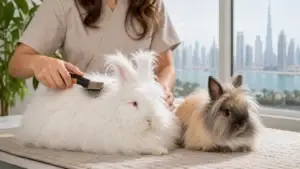
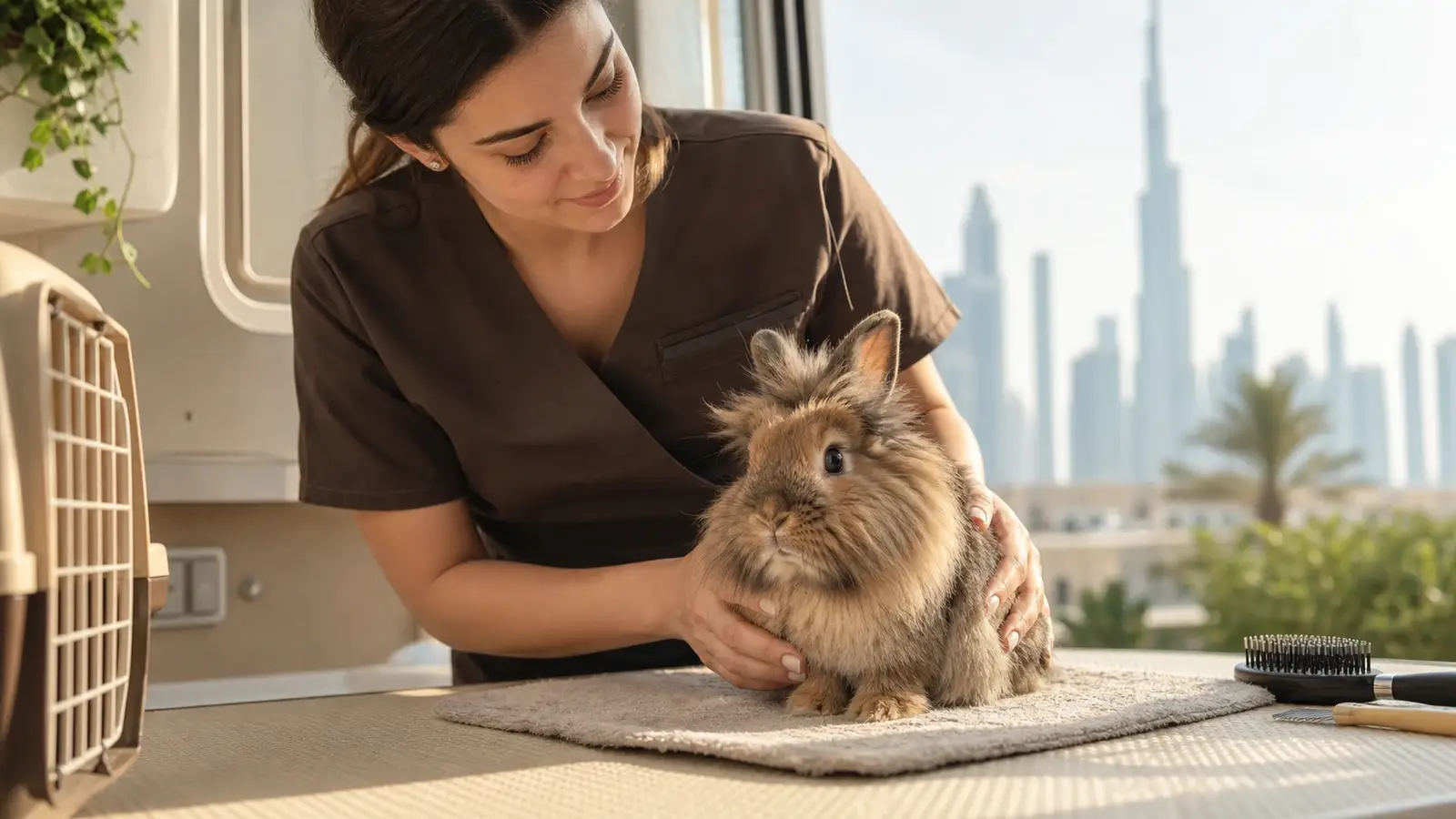
Professional rabbit grooming should focus on brushing and loose-fur removal, mat and skin checks, nail care, hygiene observation and limited cleaning only when appropriate. Routine full-water bathing is not a normal requirement for rabbits.
Rabbits have delicate skin, powerful hind legs and a vulnerable spine. Their grooming should be handled differently from dog or cat grooming. Severe mats, urine-soaked fur, wounds, reduced appetite or fewer droppings may require a rabbit-savvy veterinarian rather than a routine appointment.
Rabbit grooming components at a glance
| Component | Normal purpose | Important boundary |
|---|---|---|
| Brushing and loose-fur removal | Reduce loose coat and help maintain the skin and fur | Frequency depends on coat length and shedding |
| Mat and tangle assessment | Identify friction areas and coat problems | Scissors should not be used near rabbit skin |
| Nail assessment and trim | Prevent excessive length and snagging | Safe body and hindquarter support is essential |
| Hygiene-area check | Observe soiling around the hindquarters and feet | Persistent soiling can indicate illness |
| Limited cleaning | Address a small, specific dirty area when appropriate | Routine full baths are discouraged |
| Ear and skin observation | Notice debris, parasites, irritation or wounds | Grooming does not replace veterinary diagnosis |
| Coat shortening | Make a long coat more manageable where suitable | Severe or felted coats may need specialist or veterinary care |
The appointment should be built around the rabbit’s actual coat and health needs.
Brushing and loose-fur removal
Rabbits groom themselves and swallow loose hair in the process. They cannot vomit. Removing loose coat is therefore an important part of routine care, especially during heavy moulting.
The schedule differs by coat type:
- long-haired rabbits generally need daily coat care;
- short-haired rabbits should usually be brushed at least twice a week;
- and all rabbits may need more frequent grooming during a heavy shed.
A professional appointment can help when the owner cannot safely manage the loose coat, the rabbit has a dense or long coat, or shedding has become difficult to control.
Professional grooming does not replace the owner’s routine coat checks between visits.
Mat and tangle assessment
Mats can form around:
- the chin and neck;
- chest;
- armpits;
- belly;
- legs and feet;
- and hindquarters.
Rabbit skin is thin and easily injured. Mats should not be cut with scissors because skin can be pulled into the coat.
Small, loose tangles and a felted coat are not the same problem. The groomer should assess:
- how close the mat is to the skin;
- the size of the affected area;
- whether the coat is wet or soiled;
- whether the rabbit shows pain;
- and whether the rabbit can safely tolerate removal.
Severe matting may need experienced clipping or rabbit-savvy veterinary care. A preferred cosmetic result cannot be guaranteed when welfare requires a shorter coat.
Read the dedicated matted rabbit fur guide for the full decision framework.
Rabbit nail care
Rabbit nails grow continuously and often need regular checks. Many rabbits require trimming around every four to eight weeks, but the correct interval depends on the individual rabbit, activity and nail growth.
Professional help may be useful when:
- the owner cannot safely support the rabbit;
- the nails are dark and difficult to assess;
- the rabbit becomes highly stressed;
- nails snag or change the foot position;
- or several grooming needs can be addressed in one appointment.
Rabbit handling is not the same as restraining a dog or cat. The body and hindquarters must be supported, and the rabbit should never be “tranced” as a grooming method.
Injury, pain, bleeding or abnormal nail growth requires a rabbit-savvy veterinarian.
Hygiene-area checks
A groomer may check the hindquarters, feet and coat for:
- trapped debris;
- dried material;
- urine staining;
- faecal soiling;
- moisture;
- matting;
- skin irritation;
- and signs of flystrike risk.
A dirty bottom is not always a grooming problem. It may be connected to:
- dental pain;
- arthritis or reduced mobility;
- obesity;
- diet;
- diarrhoea;
- urinary problems;
- or another illness.
Persistent soiling, urine scald, wounds, a strong new odour or fly eggs or larvae require urgent veterinary attention.
Should rabbit grooming include a bath?
Routine full-water baths are discouraged. Rabbits are naturally clean, and bathing can cause severe stress and chilling. Drying a dense coat completely is also difficult.
Safer options may include:
- brushing;
- removing loose or soiled coat professionally;
- limited spot cleaning;
- or veterinarian-directed cleaning for a medical problem.
The exact method depends on the cause of the dirt and the rabbit’s health. A rabbit should not be placed through a full bath only because the service appears on a generic package list.
Read Should Rabbits Be Bathed? before selecting a cleaning service.
Ear and skin observation
Routine rabbit grooming can create an opportunity to notice:
- flaky or inflamed skin;
- wounds;
- external parasites;
- abnormal lumps;
- ear debris;
- moist areas;
- and changes in coat quality.
A groomer may report observations but should not diagnose or treat disease. Rabbits with head tilt, ear pain, severe debris, skin injury or illness need a veterinarian.
Long-haired rabbit care
Angora, Lionhead and other long-haired rabbits require much more maintenance than short-haired rabbits.
Professional support may include:
- coat separation;
- loose-fur removal;
- mat assessment;
- hygiene-area trimming;
- and maintaining a shorter manageable coat where appropriate.
Long coats can mat quickly. A monthly appointment alone is not enough when daily home care is missing.
SMS Rabbit Basic and Full Grooming
Client-provided service records show two at-home rabbit-grooming options:
| Package | Recorded starting price | Displayed scope |
|---|---|---|
| Rabbit Basic Grooming | AED 200 | Nail, ear, coat and cleaning elements are displayed |
| Rabbit Full Grooming | AED 260 | Adds broader coat trimming or shaving to the displayed package |
The live rabbit grooming page should be checked before booking. Package wording does not override rabbit-welfare requirements. Bathing, fragrance, ear work and coat removal must be assessed for the individual rabbit.
What owners should disclose before booking
Share:
- breed and coat length;
- age and approximate weight;
- current matting or shedding;
- appetite and droppings;
- mobility problems;
- medication and medical conditions;
- previous handling reactions;
- any urine or faecal soiling;
- wounds or skin concerns;
- and the exact grooming need.
Photos can help the initial discussion, but serious problems need veterinary assessment.
Book rabbit grooming at your Dubai home
SMS Pet Grooming provides rabbit grooming at the customer’s Dubai home. Choose a package only after discussing the rabbit’s coat, nails, health and tolerance.
Review the current service on the mobile rabbit grooming page and explain any mats, soiling or medical changes before the appointment is confirmed.
Related grooming guides
Frequently asked questions
How often should a rabbit be professionally groomed?
It depends on coat length, shedding, nail growth and the owner’s ability to maintain the coat. Long-haired rabbits need daily home grooming and may benefit from regular professional support.
Should rabbits be bathed during grooming?
Routine full-water baths are not recommended. Brushing, limited cleaning or veterinary-directed care is usually more appropriate.
Can a groomer remove rabbit mats?
Some mats can be managed by an experienced rabbit groomer. Severe, felted, painful or medically soiled coats may require a rabbit-savvy veterinarian.
How often do rabbit nails need trimming?
Many rabbits need nail care about every four to eight weeks, but the correct interval depends on individual growth and activity.
Is rabbit grooming the same as cat grooming?
No. Rabbit skin, spine, hind-leg strength, stress responses and bathing needs make rabbit grooming a separate specialist service.